
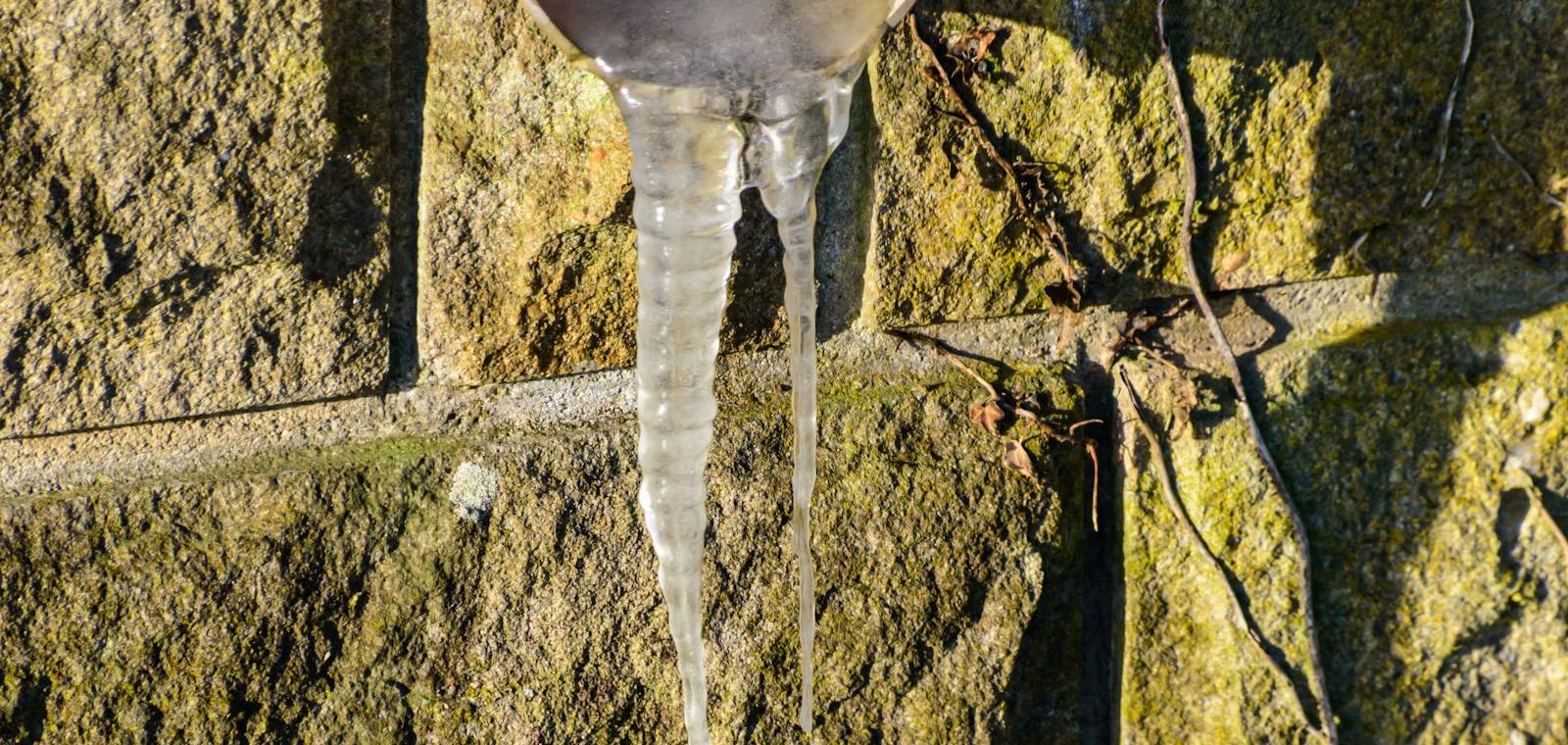
Frozen & burst pipes · Boulder, CO
Frozen and Burst Pipe Repair in Boulder, CO
If a faucet gives no water or only a trickle after a cold night, a pipe feeding it is probably frozen. If water is spraying or dripping from a wall or ceiling, the frozen section has split. Shut off the main valve and call. B&D Plumbing thaws frozen lines safely, repairs burst pipe and frost-free hose bibs, and finds the next weak spot before it fails.
What to Do If a Pipe Is Frozen or Has Burst
If the pipe is frozen but not leaking
- Open the faucet the frozen line feeds, both hot and cold. Moving water helps thaw the line and relieves pressure.
- Warm the area: open cabinet doors, run a space heater in the room at a safe distance, or use a hair dryer on exposed pipe, starting at the faucet end and working back.
- Never use an open flame, a propane torch or a heat gun on pipe in a wall. It starts fires and can boil the water trapped inside.
- Know where the main shutoff is, because the split often shows up only when the ice melts.
If the pipe has burst
- Close the main water valve immediately.
- Turn off power to any circuits where water is reaching outlets, lights or fixtures, if you can do it safely.
- Open the lowest faucet to drain the remaining water out of the system.
- Call B&D Plumbing at (720) 571-0891, any hour.
- Move belongings and start removing standing water. Photograph the damage for insurance.
Where Do Pipes Freeze in Boulder Homes?
Pipes freeze in Boulder homes where they run through unheated or poorly insulated space exposed to cold outside air. The usual spots:
- Exterior walls, especially kitchen and bathroom sinks on north-facing walls
- Crawl spaces with open or broken foundation vents
- Garages, including lines to a garage utility sink or water heater
- Cantilevered floors and bump-outs with a bathroom or kitchen above an open underside
- Attics, where supply lines run to an upstairs bath
- Frost-free hose bibs (sillcocks) with a hose still attached. The trapped water cannot drain back, freezes inside the wall, and splits the tube.
- Irrigation backflow assemblies left charged after fall
The frost-free hose bib deserves its own mention. It splits inside the wall, not outside, so nothing shows until the first spring watering. Then water runs into the basement or wall cavity instead of out the hose.
Why Boulder's Winter Swings Lead to Burst Pipes
Boulder winters often bring mild, sunny days broken by sudden arctic cold fronts, and homeowners who were fine all week get caught by one hard freeze night. Pipes that never froze during mild weather can freeze solid during a cold snap, especially when strong winds push cold air into wall cavities, crawl space vents and gaps around rim joists.
The bigger risk comes the next day. Ice in a pipe does not usually split it where the ice is. Pressure builds between the ice blockage and the closed faucet, and the pipe splits there. Nothing leaks until the ice melts. When the afternoon warms up, the split section starts spraying, often while everyone is at work.
That timing is why we tell Boulder homeowners to know where the main shutoff is before winter, and to check basements and crawl spaces the day after a hard freeze. The split-level and ranch homes in Table Mesa and the older houses in North Boulder often have supply lines running through garages, exterior walls or crawl spaces that are exposed during deep cold.
How Frozen and Burst Pipe Repair Works
- Locate the frozen section. Following the line from the dead faucet back toward the cold zone. A frozen pipe often shows frost or is cold to the touch.
- Thaw safely. Controlled warm air or pipe heating methods appropriate to the pipe material, with the faucet open, while watching for leaks as the line thaws.
- Find every split. One freeze can damage more than one spot. With the main reopened slowly, the plumber checks the full exposed run.
- Repair the pipe. The split section is cut out and replaced with new copper, PEX or the appropriate material. Old galvanized pipe nearby is evaluated, since a freeze often weakens the threads next to the failure.
- Replace damaged hose bibs with a correctly sized frost-free sillcock, sloped so it drains.
- Reduce the chance of a repeat. Insulating the exposed run, sealing air leaks around it, rerouting the line to a warm space where practical, or adding heat tape rated for the pipe.
- Test. The repaired system goes back under full pressure and gets checked for leaks.
What Affects the Cost of Burst Pipe Repair
The cost depends on how many places the pipe split, where they are, and how much finished wall or ceiling stands between the plumber and the pipe.
- Number of failures: one split in an exposed basement line versus several along a crawl space run.
- Access: opening and patching drywall, cabinets or a ceiling adds time.
- Pipe material: PEX repairs are fast. Galvanized pipe often means replacing more than the split section.
- Prevention work: insulating, rerouting or adding a heated chase.
- Timing: freeze events produce many calls at once, often overnight.
- Water damage: drying and drywall restoration are separate from the plumbing repair.
When a Frozen Pipe Is an Emergency
A burst pipe is always an emergency. A frozen pipe becomes one when you cannot thaw it, when it is in a wall or ceiling you cannot reach, or when it feeds the whole house. No water anywhere in the house during a freeze often means the service line or the main has frozen near where it enters the house. Call our 24/7 emergency plumber line. Do not try to thaw it with a flame.
How to Prevent Frozen Pipes Next Winter
- Disconnect garden hoses before the first freeze so frost-free hose bibs can drain.
- Blow out and shut down the irrigation system, and drain the backflow assembly.
- Keep the heat at least in the mid-50s when you travel, and have someone check the house.
- Open sink cabinet doors on exterior walls during hard cold so room heat reaches the pipes.
- Let a faucet on an exposed line drip slowly during the coldest nights.
- Close garage doors and seal crawl space vents and rim joist gaps in winter.
- Insulate exposed pipe in garages, crawl spaces and unheated basements.
If one part of your house freezes every winter, have the line rerouted or properly protected. That costs less than repeating the repair. B&D Plumbing handles everyday plumbing repair in Boulder year-round.
Frozen Pipe Questions
Will a frozen pipe always burst?
No. Many frozen pipes thaw without damage, especially if a faucet on the line was open. But pressure between the ice and a closed valve can split the pipe, and the leak appears only after it thaws. Watch the line closely as it warms up.
Does homeowners insurance cover burst pipes?
It depends on the policy. Many policies cover sudden water damage from a burst pipe but exclude damage from long-term leaks or from leaving a home unheated. Photograph everything and contact your insurer promptly.
Is PEX less likely to burst than copper?
Yes. PEX can stretch somewhat when water freezes inside it, so it tolerates freezing better than copper. It is not freeze-proof, and fittings can still fail. The right fix is keeping the pipe warm.
Why did my outside faucet leak inside the basement in spring?
A frost-free hose bib with a hose left on over winter could not drain. Water froze inside the long tube in the wall and split it. The leak shows only when the faucet is turned on. The fix is replacing the sillcock.
How long does it take to thaw a frozen pipe?
An exposed pipe can thaw in under an hour with steady, gentle heat. A pipe inside an exterior wall can take longer and may need the wall opened if it will not thaw from the room side.
Frozen or Burst Pipe? Call Now.
B&D Plumbing answers 24/7 at (720) 571-0891. Shut off the main water valve, and we will take it from there.
Licensed plumber · Answered 24/7 · 2525 Frontier Ave, Boulder