
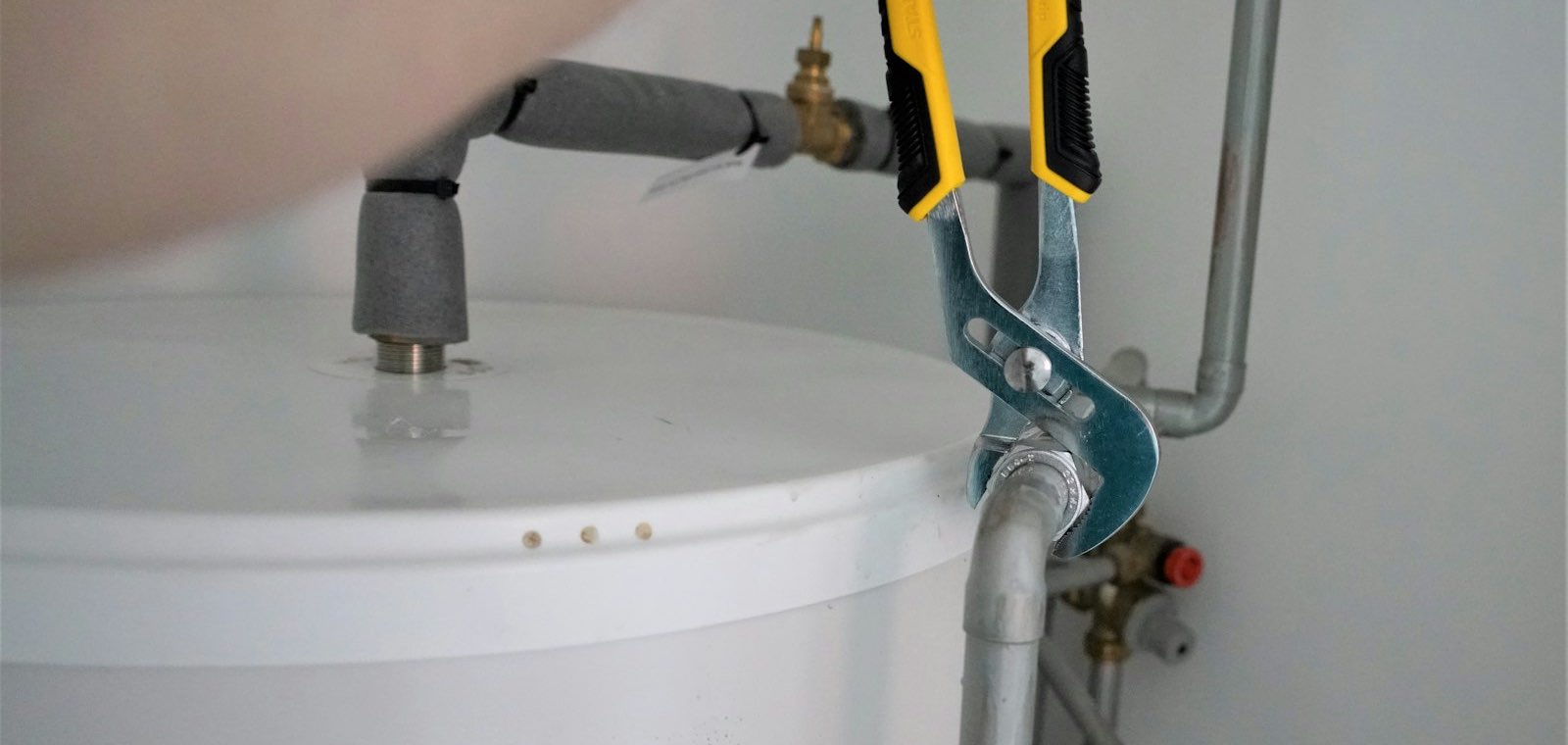
Water heaters · Boulder, CO
Water Heater Repair and Replacement in Boulder, CO
Most water heater problems come down to the burner or heating element, the thermostat or gas valve, or the tank itself. Parts can be repaired. A leaking tank cannot. B&D Plumbing diagnoses gas, electric and tankless water heaters in Boulder homes, tells you which situation you are in, and repairs or replaces the unit.
What Are the Signs Your Water Heater Needs Repair?
The most common signs your water heater needs repair are no hot water, hot water that runs out quickly, water around the base, rusty or smelly hot water, and popping or rumbling sounds while the burner runs. Each sign points to a different part:
| What you notice | Likely cause | Usually |
|---|---|---|
| No hot water, gas unit | Pilot out, failed thermocouple or flame sensor, bad gas control valve, blocked combustion air | Repair |
| No hot water, electric unit | Tripped breaker or high-limit reset, burned-out element, failed thermostat | Repair |
| Hot water runs out fast | Failed lower element (electric), broken dip tube, sediment taking up tank volume, undersized unit | Repair or replace |
| Water at the base | Leaking relief valve, drain valve or fitting, or a rusted-through tank | Fitting: repair. Tank: replace |
| Rusty hot water only | Depleted anode rod or corrosion inside the tank | Anode or replace |
| Rotten egg smell in hot water | Reaction between the anode rod and bacteria in the tank | Anode change, flush |
| Popping or rumbling | Sediment on the tank bottom boiling under the burner | Flush, or replace if severe |
Check one thing before calling: the cold water valve on top of the tank should be open, and an electric unit's breaker should be on. If the breaker trips again right away, leave it off and call.
Repair or Replace Your Water Heater?
Repair the water heater when a part has failed and the tank is sound. Replace it when the tank leaks, or when an older unit needs a costly repair. No part fixes a leaking tank.
- Repair makes sense for a thermocouple, flame sensor, igniter, element, thermostat, relief valve or drain valve on a tank that is not leaking and is not near the end of its expected life.
- Replacement makes sense when water comes from the tank body, when the tank is rusting through at the bottom seam, or when an older tank needs a gas valve or multiple parts at once.
- Age matters. The manufacture date is on the rating plate, sometimes coded in the serial number. A tank well past its warranty period is a candidate for planned replacement before it fails on its own.
Tank or tankless?
A tank stores 40 to 75 gallons of heated water and is simpler and cheaper to replace like-for-like. A tankless unit heats on demand, takes less space and does not run out during back-to-back showers. It does need a larger gas line, different venting and, on gas models, an altitude rating suited to Boulder. Switching from tank to tankless is a bigger job than a swap. We explain what your house would need before you decide.
What Water Heater Replacement Involves
A replacement is more than setting a new tank in place. Here is what a proper installation includes:
- Shut down and drain. Turn off gas or power and water, then drain the old tank through a hose to a floor drain or outside.
- Disconnect and remove the old unit from the water, gas and vent connections, and haul it away.
- Set the new unit level, on a drain pan where one is needed, with required clearances from walls and combustibles.
- Connect water lines with new connectors and a shutoff on the cold side. A thermal expansion tank is added where the system is closed (for example, with a pressure-reducing valve or check valve).
- Connect gas and vent (gas models): a new flex connector or hard pipe, a sediment trap, and a vent sized and pitched correctly. Every gas joint is leak-tested.
- Pipe the relief valve discharge to an approved termination near the floor or drain, so a release cannot scald anyone.
- Fill, fire and test. Purge the air from the tank, light or power the unit, check the draft at the vent hood, and set the temperature (120°F is a common safe setting).
Depending on the scope, water heater replacement can require a City of Boulder permit and inspection. We tell you up front if your job needs one.
How Boulder's Altitude and Soft Water Affect Water Heaters
Boulder sits above 5,000 feet, so a gas water heater must be rated or configured by its manufacturer for that elevation. At altitude there is less oxygen in each cubic foot of air. A burner set up for sea level gets too much gas for the air available, which can leave soot in the flue, create excess carbon monoxide or trip the flame safety. Manufacturers publish high-altitude versions or derating instructions, and we check them on every gas installation and on repairs where the flame looks wrong.
Water chemistry works in your favor here. The City of Boulder reports average hardness around 2.4 grains per gallon, which is soft. Tanks on city water collect far less hard scale than in hard-water cities, so the anode rod usually decides how long the tank lasts. Checking and replacing the anode on a tank you plan to keep is cheap insurance. If you get water from a well or a different provider, the picture can change, so mention it when you call.
Homes from the 1970s through 1990s in Gunbarrel and the split-levels in Table Mesa often have water heaters in tight closets or garages. That affects clearances, venting and whether a larger or tankless unit will fit.
What Affects Water Heater Repair and Replacement Cost
Water heater cost depends on fuel type, capacity, tank versus tankless, the condition of the existing venting and gas line, and how hard the unit is to reach.
- Part versus whole unit. A thermocouple or element is a small repair. A gas control valve on an older tank often tips the decision toward replacement.
- Fuel and type. Gas, electric, power-vent and tankless units differ widely in equipment cost and installation work.
- Code updates. Expansion tanks, relief valve piping, vent changes and drain pans can be needed to bring an old installation up to current code.
- Location. A basement with a clear path is easier than an attic, a tight closet or a crawl space.
- Converting to tankless. Upsizing the gas line, new venting and a condensate drain add to the job.
- Permit and inspection where the City of Boulder requires one.
When a Water Heater Problem Is an Emergency
A water heater is an emergency when the tank is leaking, the relief valve keeps discharging, or you smell gas near it.
- Leaking tank: close the cold inlet valve on top, turn off the gas or power, and call. A 50-gallon tank can empty onto a basement floor quickly.
- Relief valve discharging hot water repeatedly: the tank may be overheating or system pressure may be too high. Turn the unit off and call.
- Gas smell: leave the house and call Xcel Energy or 911 from outside. Do not try to relight the pilot.
- Scorch marks or flame outside the burner area on a gas unit: turn the gas control to off and call.
No hot water with no leak is inconvenient but rarely dangerous. We still take those calls around the clock as part of our 24/7 emergency plumbing service.
Keeping a Water Heater Going After Service
Drain a few gallons from the drain valve once a year to clear sediment. Lift the relief valve lever briefly to make sure it moves. Keep stored items out of the space around a gas unit, because it needs that air to burn cleanly. Watch the base of the tank for moisture. A small drip caught early is a valve. A drip ignored becomes a ceiling repair downstairs. For anything else in the house, B&D Plumbing provides full plumbing services in Boulder.
Water Heater Questions Boulder Homeowners Ask
How long does water heater replacement take?
A like-for-like tank swap is usually a same-day job. Converting to tankless, relocating the unit or upgrading the gas line and venting takes longer. We give you a time estimate after seeing the installation.
Do I need a high-altitude water heater in Boulder?
Yes, if the water heater is gas. Gas water heaters in Boulder must be rated or configured for the elevation according to the manufacturer's instructions. Electric water heaters are not affected by altitude in the same way, because they do not burn fuel.
Why does my hot water smell like rotten eggs?
The usual cause is a reaction between the tank's magnesium anode rod and bacteria in the water, which produces hydrogen sulfide. Swapping to an aluminum-zinc anode and flushing the tank typically fixes it. If cold water smells too, the cause is in the supply, not the heater.
Do I need a water softener to protect my water heater in Boulder?
No, not if you are on City of Boulder water. The city reports average hardness around 2.4 grains per gallon, which is soft. Annual flushing and checking the anode rod do more for tank life here.
Can you repair a tankless water heater?
Yes. Common tankless repairs include descaling the heat exchanger, cleaning the inlet filter, replacing flame sensors or igniters, and clearing error codes caused by venting or gas supply problems.
Other Plumbing Services That Pair With Water Heater Work
No Hot Water or a Leaking Tank?
Call B&D Plumbing at (720) 571-0891. A licensed plumber will diagnose your water heater and give you a straight answer on repair versus replacement.
Licensed plumber · Answered 24/7 · 2525 Frontier Ave, Boulder