
Whole-house & partial repiping · Boulder, CO
Repiping Services in Boulder, CO
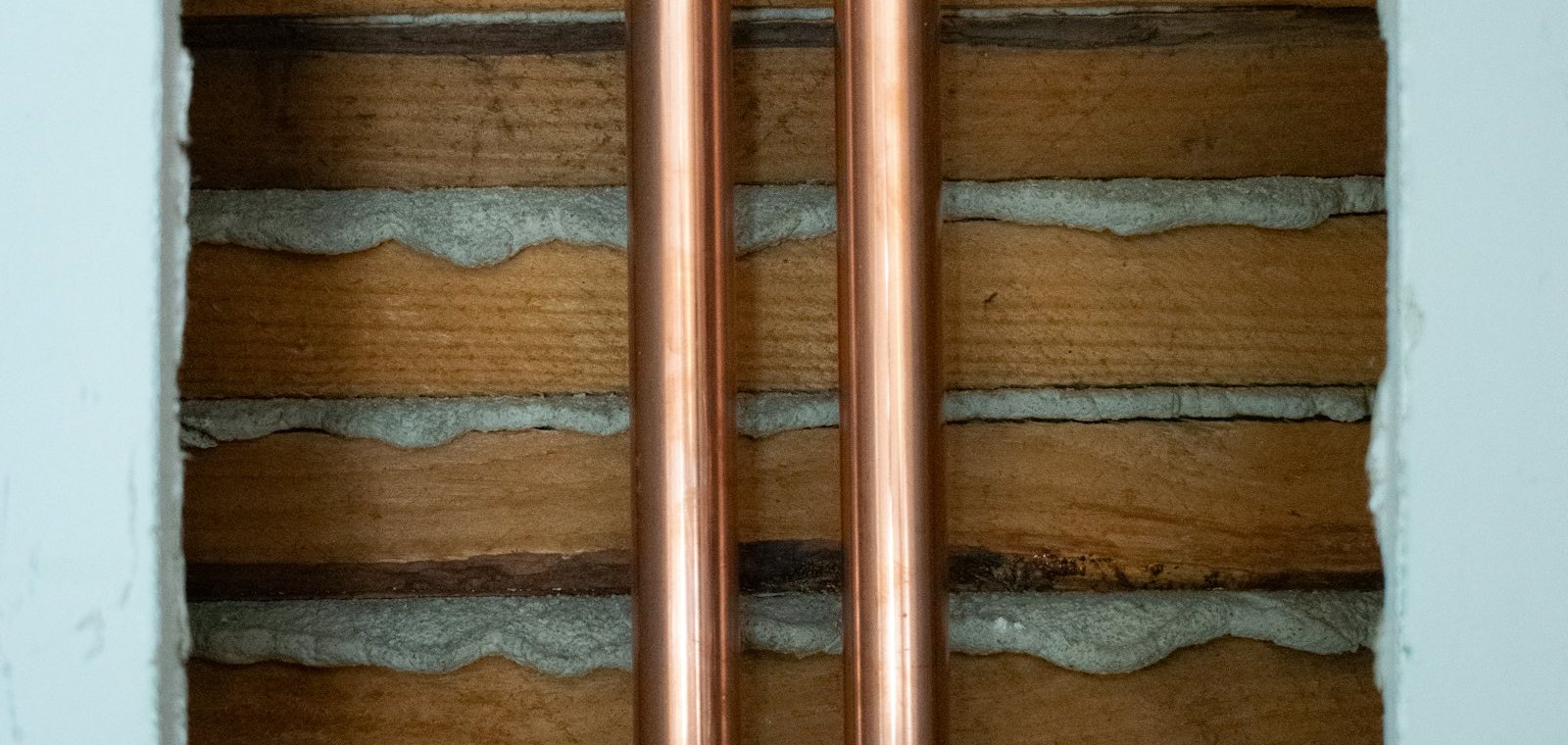
Repiping replaces a home's old water supply pipe, usually galvanized steel or polybutylene, with new PEX or copper. It is the fix when the pipe itself is failing: low pressure from rust buildup, repeated pinhole leaks, or a pipe type known to fail at the fittings. B&D Plumbing repipes Boulder homes in sections or all at once, depending on what the existing pipe looks like.
How Do You Know a House Needs Repiping?
A house needs repiping when the supply pipe is failing throughout, not at a single point: low pressure everywhere, rusty water, and leaks that keep turning up in new places. One leak is a repair. A pattern of leaks is the pipe telling you its age.
- Low water pressure on several fixtures, worst on the hot side or on upper floors. Galvanized pipe rusts from the inside until the opening narrows.
- Brown or rusty water when a faucet first opens or after the water has been off.
- Pinhole leaks showing up in different places within a year or two.
- Leaks at threaded joints where old galvanized pipe screws into fittings.
- Gray polybutylene pipe with crimp rings, even with no leaks yet. The material was pulled from the market after widespread fitting failures.
- A patchwork of old repairs: copper spliced into galvanized, rubber clamps, mixed fittings.
Which Old Pipe Types Need Replacing?
| Pipe | How to recognize it | Why it fails |
|---|---|---|
| Galvanized steel | Dull gray, threaded joints, a magnet sticks | Rust builds inside, narrowing the pipe and causing leaks |
| Polybutylene (PB) | Gray or blue flexible plastic, crimp rings, often stamped PB2110 | Fittings and pipe degrade and crack, sometimes with no warning |
| Lead | Dull gray, soft, scratches to shiny silver, a magnet does not stick | Health risk, not a leak risk. Replace if found. |
| Copper | Reddish-brown, soldered joints | Usually long-lived. Pinholes or green crust at joints mean a local repair or a section replacement. |
The magnet and coin test works on the pipe where water enters the house. If you are unsure, the plumber identifies it on the first visit.
Which Boulder Homes Still Have Galvanized or Polybutylene Pipe?
In Boulder, galvanized supply pipe turns up mainly in homes built before 1955, and polybutylene in homes built from the late 1970s to the mid-1990s. The City of Boulder states that copper has been required since 1955, so galvanized in a Boulder house is original to an older home or left from early repairs. In Mapleton Hill's historic homes, where more than half the homes predate 1910, galvanized is common unless the house has already been repiped.
Polybutylene is a different story. It was used nationally during the late 1970s through the mid-1990s, the same years most of Gunbarrel's neighborhoods were built. Not every home from that era has it, but it is worth looking for. The City of Boulder's service line inventory found no lead service lines, though the city encourages owners of pre-1956 homes to check their pipes.
Should You Repipe With PEX or Copper?
It depends on the house. PEX suits most repipes because it runs through walls in long flexible lengths with few joints, while copper suits exposed runs and owners who prefer metal.
- PEX: fewer fittings inside walls, smaller openings needed to snake it through finished spaces, and more tolerance of freezing than copper. It must be kept out of direct sunlight and away from high heat at the water heater.
- Copper: rigid, long-lived and familiar. It needs more joints and more open wall to install, which raises labor in finished homes.
Many repipes combine the two: copper at the water heater and exposed basement runs, PEX through walls and ceilings.
How Is a House Repiped?
To repipe a house, the plumber maps the existing pipe, runs new lines alongside it, switches fixtures over, then abandons the old pipe in place.
- Map the system. Trace where each line runs and what is galvanized, PB or copper. Decide between a partial and a whole-house repipe.
- Plan the routes. Use the basement ceiling, closets and plumbing walls to reach each fixture with the fewest openings.
- Open access points. Small, targeted openings in drywall or plaster, with floors and furniture protected.
- Run new supply lines from the main shutoff to each fixture, with new shutoff valves under sinks and toilets.
- Switch over one fixture group at a time, so the house is without water for as little time as possible.
- Pressure test the new system and check every joint.
- Inspection and patching. Where a permit is required, the work is inspected before walls are closed. Openings are then patched.
Most whole-house repipes keep the water on overnight. A partial repipe of one bathroom or the basement runs is often a one-day job.
What Affects the Cost of Repiping?
Repiping cost depends mainly on the number of fixtures, how many floors the pipe travels through, wall materials and access, and the pipe chosen.
- Fixture count: each sink, toilet, tub, hose bib and appliance connection is a run of pipe and a new valve.
- Stories and layout: a ranch over an open basement is simpler than a two-story house over a finished basement.
- Wall material: plaster in older homes takes more care to open and patch than drywall.
- PEX versus copper: material cost and labor differ.
- Main service line: if the line from the meter is galvanized too, replacing it is separate work. See water line repair.
- Permit and inspection where the City of Boulder requires one.
- Patching and finish work after the pipe is in.
When Does Old Pipe Become an Emergency?
Old pipe becomes an emergency when it leaks into the house: a pinhole spraying inside a wall, a threaded joint letting go, or a polybutylene fitting that cracks. Close the main valve and call our round-the-clock emergency line. The leak gets repaired that day, and the repipe can be planned afterward with a clear head. Low pressure and rusty water are not emergencies, but they are the warning before one.
What Changes After a Repipe?
Water pressure is usually the first thing you notice, along with clear water from the first second. Every fixture gets a working shutoff valve. Flush faucet aerators after the first week, since bits of old scale can come loose during switchover. If you are planning a remodel, repiping first saves opening the same walls twice. For everything else in the house, B&D Plumbing is a full-service plumber in Boulder.
Repiping Questions Boulder Homeowners Ask
Do I have to repipe the whole house at once?
No. Partial repiping works well when only some sections are galvanized or PB, or when you want to spread the work over remodeling projects. A whole-house repipe makes more sense when old pipe runs throughout and is failing in several places.
Is polybutylene pipe always going to fail?
No, not always, but it has a long record of failures at fittings and from material breakdown, and many insurers treat it as a risk. Replacing it on your schedule beats replacing it after a leak.
Will repiping fix low water pressure?
Yes, when the cause is corroded galvanized pipe. If pressure is low at the meter or the pressure-reducing valve is failing, those need attention too. The plumber checks pressure at the source first.
Can I stay in the house during a repipe?
Yes, in most cases. Water is off for limited periods during switchover, and work areas are covered and cleaned each day.
Does Boulder have lead water pipes?
No lead service lines were found in the City of Boulder's service line inventory. The city still encourages owners of homes built before 1956 to check the pipes inside their homes.
Low Pressure or Leaks That Keep Coming Back?
Call B&D Plumbing at (720) 571-0891. We identify what pipe your home has and tell you whether a repair or a repipe makes sense.
Licensed plumber · Answered 24/7 · 2525 Frontier Ave, Boulder